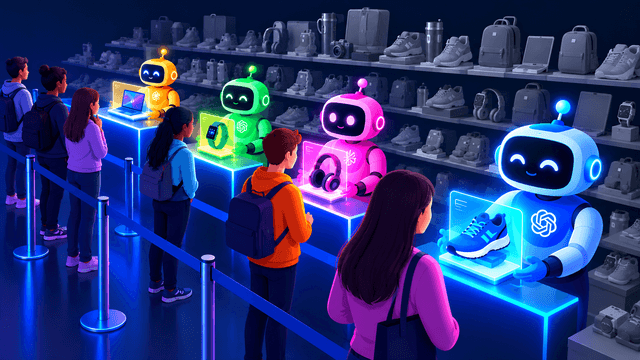

The next frontier of ecommerce isn't selling to humans—it's selling to the AI agents that shop on their behalf. This isn't science fiction. It's happening now, and the brands that prepare today will dominate tomorrow. The transition from human-driven to agent-driven commerce is accelerating faster than most industry observers predicted, and the window to establish a competitive position is narrowing.
What Are AI Shopping Agents?
AI shopping agents are autonomous systems that can research products, compare options, and complete purchases without human intervention. They act on behalf of users who have delegated their shopping decisions to AI—either for specific categories where they trust the AI's judgment, or for routine repurchase decisions where they simply want the best available option delivered automatically.
The scope of agent commerce is broader than most brands realize. It's not just about voice assistants reordering household staples. It encompasses AI systems that manage corporate procurement, personal finance tools that automatically find the best deals on planned purchases, and subscription services that use AI to optimize their product selections. Each of these represents a distinct channel that requires its own optimization strategy.
Machine-Readable Product Data
Agents can't browse your website the way humans do. They need structured, machine-readable data that they can process programmatically. This is the most fundamental requirement for agent commerce readiness, and it's where most brands fall short. A beautifully designed product page that converts human visitors at a high rate may be completely inaccessible to an AI agent that needs to extract specific attributes to make a purchase decision.
The solution is not to redesign your product pages—it's to ensure that all the information on those pages is also available in structured, machine-readable formats. This means comprehensive schema markup, well-documented APIs, and product feeds that are complete, accurate, and regularly updated. Agents will use whichever data source is most reliable and complete, so your goal is to make your own data the most authoritative source available.
API-First Commerce and Trust Verification
Headless commerce architectures with robust APIs are essential for agent accessibility. Agents need to query inventory, pricing, and product data in real-time before completing a purchase. A store that requires a human to navigate a checkout flow is not accessible to agents. A store with a well-documented API that supports programmatic product discovery, cart management, and checkout is.
Agents are also programmed to be cautious. They need verifiable trust signals—certifications, reviews, return policies—before completing a purchase on behalf of a user. The agent's primary obligation is to the user who delegated the purchase, which means it will not complete transactions with brands it cannot verify. Clear, machine-readable return policies, verified review data, and consistent brand information across authoritative sources are all essential for agent trust.
Preparing Your Store for Agent Commerce
The best way to assess your agent commerce readiness is to ask a simple question: could an AI agent find, evaluate, and purchase your products without any human assistance? If the answer is no, these are the areas that need attention:
- Structured product data accessible via schema markup and product feeds with complete attribute coverage
- Documented APIs that support programmatic inventory queries, pricing checks, and checkout flows
- Machine-readable policies for returns, shipping, and warranties that agents can parse and evaluate
- Verified trust signals including third-party reviews and certifications that agents can independently confirm