AI thinks your product page is a 2/10. It might look O.K. but trust me, it’s shit. Your patchwork of apps and plugins didn’t fix a damn thing—they just made it worse. Here’s why.
When an autonomous AI crawler, RAG scraper, or conversational shopping agent hits your product page URL, it strips the page down to bare metal. It parses the raw HTTP GET response, evaluates the Document Object Model (DOM), and attempts to extract a clean JSON-LD entity graph.
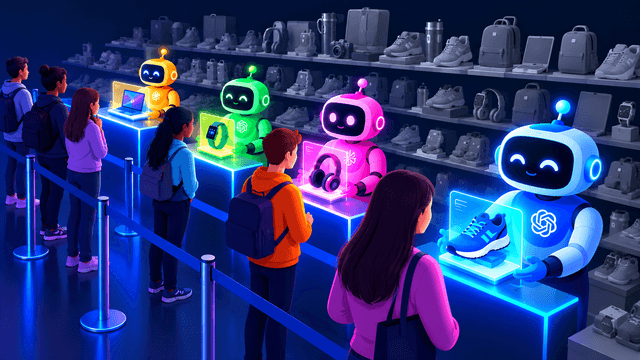
Machines do not browse your storefront; they ingest data streams. Every major AI engine and assistant relies on specific crawlers and extraction pipelines to build its active memory:
- OpenAI (
GPTBot/ ChatGPT): Ingests structured JSON-LD and DOM nodes to populate real-time conversational shopping recommendations and in-app checkout flows via ACP (Agentic Commerce Protocol). - Google (
GoogleBot, Google AI Mode, Gemini, & Google Shopping Graph): Relies on server-rendered payloads, Merchant Center product feeds, and schema graphs to power AI Overviews and direct "Gemini Checkout" via UCP (Universal Commerce Protocol). - Apple (Apple Intelligence / Siri): Parses deep-context attributes and structured metadata to fulfill native device-level purchasing intents.
- Google Lens & Perplexity (
PerplexityBot): Extract high-density visual tags, semantic image alt attributes, and protocol hooks (.oembed, UCP/ACP compliance) to drive visual search matching and "Buy with Pro" recommendations.
If your product page fails that machine-side inspection, your brand doesn't exist in the AI consideration set. Period.
The Machine-First Paradigm Shift
In agentic commerce, legacy web metrics are completely useless. The two operational currency units of machine-first retail are absolute:
- Payload Ingestion Efficiency: How much pristine, structured data an AI crawler can extract from the initial server-rendered response before timing out.
- Crawl-to-Index Velocity: How fast a product update, price adjustment, or inventory drop propagates from your database into an AI agent's active memory.
If your server response delivers a half-baked HTML shell relying on client-side JavaScript to populate product attributes, lightweight AI agents ingest incomplete data or abandon the crawl entirely.
Native Platform Architecture: The Baseline Deficiencies
Out of the box, major ecommerce platforms are built for visual frontend displays, not machine-readable data layers. Whether you're running on Shopify, WooCommerce, Adobe Commerce (Magento), BigCommerce, or OpenCart/PrestaShop, the native core infrastructure shares the same structural blindness.
| Platform Component | Native Platform Reality | The Machine-First Impact |
|---|---|---|
| Default Schema Generation | Outputs shallow, generic JSON-LD containing only basic titles, prices, and default images. | AI agents miss granular variant properties, item conditions, and stock validity nodes. |
| DOM Hierarchy | Non-semantic HTML structures built for visual layout styling rather than entity extraction. | RAG scrapers struggle to map relationships between parent products and specific SKU attributes. |
Native platform core architecture vs. machine-first reality.
Out-of-the-box platforms treat product pages as static brochure templates, omitting the deep-context attributes and transactional validity markers that LLMs require to issue a definitive recommendation.
Code Breakdown: Shallow Native DOM vs. Server-Rendered Payload
<!-- Native Platform: Client-Side Variant Hydration (AI Blindspot) -->
<div class="product-container" data-product-id="1049">
  <!-- Crawler sees empty shell waiting for JS execution -->
  <div id="variant-selector-root"></div>
  <script src="/assets/async-variants.js" defer></script>
</div><!-- Shoptiger: 100% Server-Rendered Payload (Instant Ingestion) -->
<div class="product-container" data-product-gid="gid://shopify/Product/1049">
<div class="variant-node" data-sku="MUG-BLK-12" data-price="24.00" data-stock="in_stock">
<span class="attribute">Matte Black</span>
<span class="attribute">12oz Ceramic</span>
</div>
</div>The Shopify Agentic Illusion & The Variant Canonical Trap
Most Shopify store owners think they’ve unlocked agentic commerce the second they toggle on Shopify’s native agentic features or check a box in their admin. They flip the switch, sit back, and assume OpenAI, Gemini, and Perplexity are suddenly piping in high-intent buyers.
They are living in a fantasy.
| Feature Layer | The Native Shopify Toggle Illusion | The Technical Reality |
|---|---|---|
| Data Publishing | Pushes basic, homogenized data into standardized channels using default metafields. | Omits granular variant logic, complete Offer nodes, and explicit pricing constraints. |
| Rendering & Execution | Relies on theme app extensions and client-side JavaScript injection (async/defer). | Critical variant pickers and custom attributes are hidden behind DOM rendering delays. |
The native Shopify toggle illusion vs. technical extraction reality.
Furthermore, standard setups fail on URL canonicalization. When merchants create unique query parameters or distinct URLs for every size and color variant, they splinter link equity across dozens of duplicate pages. AI crawlers waste precious crawl budget indexing variant fragments instead of evaluating a unified product authority node.
Shoptiger enforces strict rel="canonical" consolidation directly on the main product entity graph, concentrating ranking authority while maintaining absolute URI variant mappings underneath.
Code Breakdown: Variant Canonical Splintering vs. Consolidation
<!-- Standard Setup: Splintered Link Equity Across Variant Query Parameters -->
<link rel="canonical" href="https://store.com/products/shoe?variant=67174155059441">
<link rel="alternate" href="https://store.com/products/shoe?variant=67174155059442" hreflang="x-default"><!-- Shoptiger Architecture: Consolidated Authority Node with Absolute URIs -->
<link rel="canonical" href="https://store.shoptiger.ai/products/nike-sb-paul-rodriguez-zoom-air-light-british-tan">
<link rel="item" href="https://store.shoptiger.ai/products/nike-sb-paul-rodriguez-zoom-air-light-british-tan?variant=67174155059441" data-sku="IQ6827-200">The Frankenstein App and Plugin Stack
Realizing their native platforms are deficient, merchants log into app stores and plugin repositories, duct-taping together a patchwork of third-party tools for custom options, advanced schema, product reviews, and feed generation.
| App Stack Layer | Typical Implementation | Technical Consequence for AI Agents |
|---|---|---|
| Dynamic Option Apps | Injects variant pickers and custom text fields via asynchronous JavaScript. | Lightweight crawlers execute a blank DOM state, missing all variant-level pricing and inventory data. |
| Multi-App Schema | Stacks independent JSON-LD snippets from different SEO and review plugins. | Generates conflicting entity definitions, broken relative paths, and severe schema fragmentation. |
Fragmented app stack layers and their technical consequences for autonomous AI crawlers.
This active plugin bloat results in constant data drift. To an AI agent evaluating your product page, inconsistent data equals untrustworthy data. And untrustworthy products get ignored.
Code Breakdown: Conflicting Multi-App Schema Injection vs. Unified Graph
<!-- Frankenstein Plugin Stack: Fragmented & Conflicting Schema Snippets -->
<script type="application/ld+json">{"@type": "Product", "name": "Mug"}</script>
<script type="application/ld+json">{"@type": "Review", "itemReviewed": "Coffee Cup", "ratingValue": "4.5"}</script>
<script type="application/ld+json">{"@type": "Offer", "price": "29.99"}</script><!-- Shoptiger Architecture: Unified, Nested Entity Graph -->
<script type="application/ld+json">
{
"@context": "https://schema.org/",
"@type": "Product",
"name": "Matte Black Ceramic Coffee Mug",
"aggregateRating": {
"@type": "AggregateRating",
"ratingValue": "4.9",
"reviewCount": "128"
},
"offers": {
"@type": "Offer",
"price": "24.00",
"priceCurrency": "USD"
}
}
</script>Shoptiger: Unified Machine-First Architecture
Shoptiger replaces the fragmented app stack and native platform blind spots with a single, synchronized system engineered explicitly for agentic commerce.
| Feature Layer | Standard Plugin-Heavy Setup | Shoptiger Unified Architecture |
|---|---|---|
| Data Rendering | Client-side rendering (CSR) and asynchronous script injection. | 100% server-rendered (SSR) high-density data delivered on the first byte. |
| Variant Mapping | Fragmented relative IDs and generic product groupings. | Absolute URI entity graphs with explicit, granular variant-level attributes. |
Fragmented plugin setups vs. Shoptiger's unified machine-first architecture.
Instead of managing conflicting plugin layers, Shoptiger publishes pristine product feeds, kinetic schemas, semantic image alt attributes for multimodal visual search engines, and schema-backed atomic FAQs directly into your product page code.
Code Breakdown: Lazy Image Alt Attributes vs. Semantic Multimodal Alt Data
<!-- Standard Setup: Zero Context for AI Visual Search / Google Lens -->
<img src="/cdn/shop/files/shoe.jpg" alt="product-image-1"><!-- Shoptiger Architecture: High-Context Multimodal Image Entity -->
<img src="https://cdn.store.com/p-rod-hero.jpg" alt="Nike SB Paul Rodriguez Zoom Air Low in Light British Tan wheat suede with perforated toe box and gum rubber outsole">Code Comparison: The Complete Schema & Protocol Layer
The technical delta between a standard platform setup and Shoptiger's unified architecture is visible directly in the raw source code.
Standard Platform Product Page Header (Messy & Shallow)
<!-- Standard Shopify / WooCommerce / Magento Output -->
<head>
  <title>Nike SB Skate Shoe</title>
  <link rel="canonical" href="https://store.com/products/shoe?variant=12345">
  <img src="/images/shoe.jpg" alt="product-image-1">
  <script type="application/ld+json">
    {
      "@context": "https://schema.org/",
      "@type": "Product",
      "name": "Nike SB Skate Shoe",
      "image": "https://store.com/images/shoe.jpg",
      "offers": {
        "@type": "Offer",
        "price": "110.00",
        "priceCurrency": "USD"
      }
    }
  </script>
</head><!-- Shoptiger Unified Architecture Output -->
<head>
<title>Nike SB Paul Rodriguez Zoom Air Low Light British Tan Wheat</title>
<!-- Consolidated Canonical Concentrating Authority -->
<link rel="canonical" href="https://store.shoptiger.ai/products/nike-sb-paul-rodriguez-zoom-air-light-british-tan">
<img src="https://cdn.store.com/p-rod-hero.jpg" alt="Nike SB Paul Rodriguez Zoom Air Low in Light British Tan wheat suede with perforated toe box">
<!-- Direct Enriched Feed & Agent Protocol Hooks -->
<link rel="alternate" type="application/json" href="https://store.shoptiger.ai/products/p-rod-tan.oembed">
<link rel="ucp" href="https://store.shoptiger.ai/.well-known/ucp-endpoint">
<link rel="buy" href="https://store.shoptiger.ai/cart/add">
<script type="application/ld+json">
{
"@context": "https://schema.org/",
"@type": "Product",
"productID": "gid://shopify/Product/829104",
"name": "Nike SB Paul Rodriguez Zoom Air Low Light British Tan",
"sku": "IQ6827-200",
"gtin": "0196154889021",
"image": {
"@type": "ImageObject",
"url": "https://cdn.store.com/p-rod-hero.jpg",
"caption": "Nike SB Paul Rodriguez Zoom Air Low in Light British Tan wheat suede"
},
"offers": {
"@type": "Offer",
"url": "https://store.shoptiger.ai/products/nike-sb-paul-rodriguez-zoom-air-light-british-tan",
"priceCurrency": "USD",
"price": "110.00",
"priceValidUntil": "2027-12-31",
"itemCondition": "https://schema.org/NewCondition",
"availability": "https://schema.org/InStock"
}
}
</script>
</head>Agentic Discovery & The AI Accelerator
When conversational agents across ChatGPT, Gemini, Perplexity, or Microsoft Copilot evaluate your product page, they require protocol hooks and direct ingestion paths.
| Discovery & Checkout | Standard Platform Reality | Shoptiger Enhanced Reality |
|---|---|---|
| Update Velocity | Relies on legacy multi-week batch feed queues and slow organic crawl cycles. | AI Accelerator API pushes and direct pings force instant ingestion, achieving rapid crawl-to-index velocity. |
| In-App Conversion | Dead-ends the user with an external link back to a traditional web checkout. | Hardcoded agentic protocol hooks (.oembed, UCP/ACP compliance) enable direct, in-app checkouts. |
Legacy crawl velocity and external dead-ends vs. Shoptiger API ingestion and in-app protocols.
The 2/10 Reality Check: Do AI Agents Completely Skip Default Stores?
If we score them objectively, default ecommerce setups sit at a 2/10 for machine readability, while Shoptiger engineers a clean 10/10.
Do AI agents completely skip default stores? It’s nuanced.
If a shopper runs a specific, high-intent conversational query ("Find me a durable 12oz ceramic coffee mug with speckled glaze under $30"), and your competitor runs a pristine, server-rendered JSON-LD schema graph while your store relies on a default theme choked with asynchronous plugins, you don't even enter the consideration set. The LLM discards your URL during initial RAG retrieval because payload ingestion failed and the data was untrustworthy.
On the flip side, legacy stores sometimes survive on pure off-page mass: massive web consensus, widespread brand equity, and heavy third-party review density across Reddit, YouTube, and Trustpilot. If you are a household name, an AI model might recommend you simply because the broader web won't shut up about you—even if your actual product page architecture is an absolute wreck.
But that safety net has a hard ceiling. As commerce shifts to zero-click, in-app transactions via Universal Commerce Protocol (UCP) and Agentic Commerce Protocol (ACP), off-page buzz stops mattering if the agent cannot execute a secure, programmatic transaction. When an AI needs to check out right inside the chat window, it demands absolute data integrity, protocol hooks, and flawless variant mapping. If your product page is a 2/10, you are locked out of the checkout layer entirely.
The Bottom Line
AI shopping agents evaluate server-rendered payload efficiency, absolute URI graphs, and data integrity.
While your competitors rely on native admin toggles, fracture link equity across uncanonicalized variant URLs, and wait months for crawlers to notice updates, a unified machine-first engine lets you dominate the recommendation layer and convert buyers right inside the chat window.
The shelf space has moved. Make sure your product page is actually built for the thing looking at it.